Thank you for following along with us this afternoon for our coverage on the Reserve Bank’s sixth cash rate decision for 2026.
The RBA has increased the cash rate by 25 percentage points to 4.6%, marking the fourth cash rate hike of the year and the first since May.
Jump to key updates

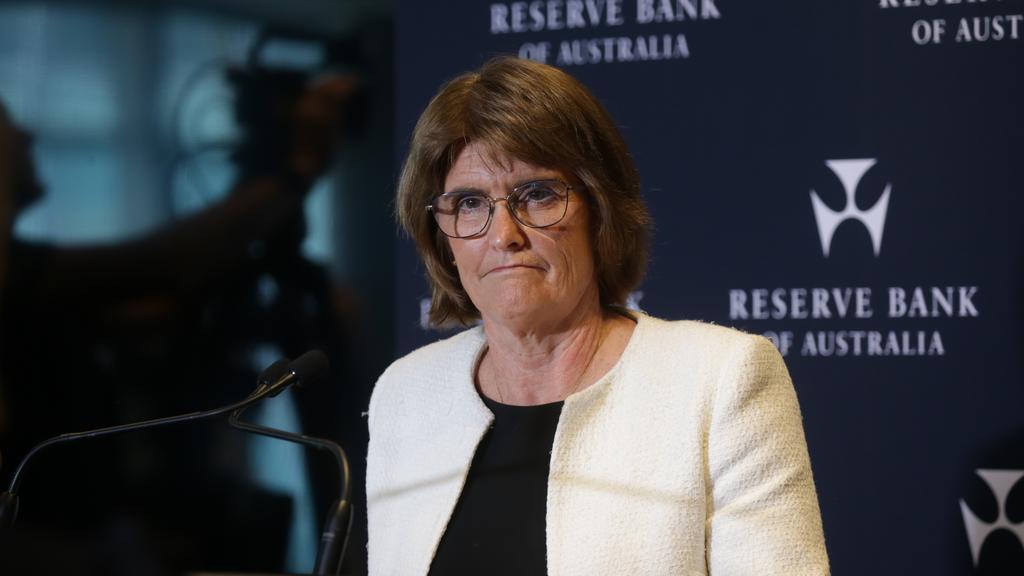
RBA Governor Michele Bullock. Picture: NewsWire/Christian Gilles
Thank you for following our coverage of the RBA’s cash rate decision
4:30pm
Thank you for following along with us this afternoon for our coverage on the Reserve Bank’s sixth cash rate decision for 2026.
To recap, the cash rate has been raised to 4.6% with governor Bullock attributing the decision to a mixture of pressure from the ongoing Middle East conflict, the AI investment boom, and ongoing domestic capacity pressures. Today’s decision marks the fourth cash rate hike of the year and the first since May.
The next decision on the cash rate – the penultimate for 2026 – is only five weeks away and will be on 3 November. Between now and then, further inflation data and labour market figures will help inform the RBA on what its final two moves for the year will look like.
In the lead up, keep up to date with all the latest RBA news on realestate.com.au and Mortgage Choice. This includes regular news and outlooks, along with analysis from our editors and team of in-house economists.
RBA tight lipped on government spending
4:15pm
High public spending and low productivity growth are very much under the microscope for governor Michele Bullock this afternoon as she faces questions from the media on the path for inflation following today’s interest rate hike.
Despite growing concerns about the persistence of high inflation, the governor was quick to brush off any direct insinuations that treasurer Jim Chalmers should rein in government spending to slow aggregate demand.
“I’m not here to play a blame game,” Ms Bullock told press conference attendees. “The bottom line is there are a number of pressures all bearing down on inflation. All sorts of things are contributing to that, then you lay the Middle East conflict on top of that and we’ve got a very difficult situation.
“I don’t want to suggest blame one way or the other, it’s just that we have got to slow the rate of demand down.”
Rate hold option had been on the table, RBA says
4:00pm
The Reserve Bank’s nine monetary policy board members discussed the feasibility of holding the cash rate steady at 4.35% today, before reaching a unanimous decision to increase it by 0.25 percentage points.
Governor Bullock also confirmed there was no talk of a ‘double’ hike, which would have sent the cash rate soaring to 4.85%.
“What we discussed were three issues identified as risks on the upside. One was the Middle East conflict going on for longer and fuel prices rising again, second was the AI boom and the third risk was that capacity pressures were higher than we thought they were,” she said.
“The first risk with the Middle East has materialised – it is worse than what we were thinking. The AI boom is certainly having an impact on demand here and overseas but I wouldn’t say it’s definitely materialised but I would say the risks are building there,” she added. “The issues to do with domestic capacity pressures is difficult. It’s difficult to estimate output gaps and how tight the labour market is.”
Rates hiked partially on the back of AI concerns
3:45pm
Governor Michele Bullock has used her opening media address this afternoon to raise specific concerns about AI in Australia and the toll the systems are taking on domestic inflation.
Speaking following the bank’s decision to raise the cash rate for a fourth time this year, Ms Bullock reiterated Australia’s inflation problems were primarily domestic, noting the global AI boom had “driven significant price rises for some inputs within the AI supply chain”, including software costs and some commodity prices.
“These costs are now starting to flow through to the prices faced by businesses and consumers,” she warned. “The AI boom is also adding to demand in the Australian economy at a time when we already have capacity pressures.”
The comments follow the mention of concern around AI investment in a monetary policy board statement earlier this afternoon, following the conclusion of the RBA’s two-day meeting. It marks the first time the board has highlighted AI within its statements.
Governor Bullock to face media questioning over RBA decision
3:30pm
Governor Michele Bullock will appear in front of journalists shortly, set to answer questions on households’ ability to cope with soaring interest rates in the lead up to Christmas.
Ms Bullock will start her appearance by outlining the discussions had among the board’s nine members about tightening versus holding over the last two days. This will likely look at members’ latest views on the continuing war in the Middle East, persistent high inflation, and consumer confidence and behaviour.
Media attention is expected to be on the bank’s latest forecasts, including any revised outlook for the path of inflation, which came in notably cooler than the bank expected in June when a 5% peak had been expected.
Ms Bullock is also likely to face questions on whether the bank will hike the cash rate again before the end of the year and whether the longer-term path towards lower inflation and potential rate cuts has changes.
RBA flags fears for housing market
3:15pm
The Reserve Bank has specifically called out its concerns about the potential economic impact of the lagging housing market, making mention of its concerns in the short statement issued to accompany its cash rate decision this afternoon.
It comes as the property market passes its fifth consecutive month in the downturn, with home prices are now 2.7% below their March 2026 peak and annual growth now moderating sharply.
While the bank had previously acknowledged it was forecasting scenarios for property price declines as high as 15-20%, it had so far stopped short of confirming it held any particular concern about the overarching effect of the issue on broader economic stability.
“Weak productivity growth continues to constrain potential growth and there are uncertainties about the economic effects of the downturn in the housing market,” the statement read. “Housing prices have fallen in most capital cities and new housing loans have declined noticeably.”
RBA forecasting woes continue amid global conflict
3:00pm
Global energy prices have risen far beyond what the Reserve Bank had anticipated they would back in its August forecasts, with all nine of its monetary policy board members agreeing to today’s rate hike to mitigate against it.
In a statement published alongside the decision to raise the cash rate to a 15-year high, the board warned higher prices were at serious risk of becoming embedded in the economy.
“Global oil supply disruptions are maintaining upward pressure on global and domestic energy prices and inflation,” it read. “Higher fuel prices have partially been passed through to prices of other goods and services. This inflation impulse is in addition to the effect of capacity pressures in the economy.
“There continue to be heightened uncertainties about the outlook for domestic economic activity and inflation. The Middle East conflict remains unresolved, and there are scenarios where inflation is higher and activity lower than forecast.”
Latest RBA hikes locks in a grim new record
2:45pm
Today’s news of another cash rate hike will be hard for many Aussie households who are continuing to feel the cost-of-living pressures from the rate increases in the first half of the year.
A new cash rate at 4.6% marks an important moment for the nation – the highest interest rates in 15 years and the most challenging financial conditions many mortgage holders will have ever experienced in their time as homeowners.
The cash rate sat at 4.75% between November 2010 and October 2011, before dropping slightly to 4.60%. Robust economic growth off the back of resource demand from Asia and Australia’s mining were behind the tight conditions back then, along with some global instability from European banks.
There are still two more opportunities for the RBA to raise the cash rate again before Christmas, with several lenders and economists across the industry expecting at least one more increase to reach an 18-year high of 4.85%.
RBA hikes the cash rate to 15-year high of 4.60%
2:30pm
The Reserve Bank has confirmed the cash rate will rise to 4.6%, a major update that brings rates to the highest seen since October 2011 and the wider Global Financial Crisis recovery period.
It is challenging news for borrowers, though not an unexpected decision as inflation continues to rise and geopolitical disruption and conflict in the Middle East remain ongoing.
Today’s decision marks the fourth rate hike from the Reserve Bank this year, squeezing households even further as they adjust to the continuing pressure of high fuel and food prices without any excise relief from the government.
The RBA board’s statement that accompanies today’s decision will be published shortly. An insight into board members’ deliberations over the last 48 hours will be central, along with latest outlooks for inflation pressures, economic growth and broader market conditions as the final quarter of the year unfolds. It will also reveal how united the MPB members were on the decision.
Markets expecting a rate hike from the RBA
2:15pm
Market expectations for this afternoon’s rates decision have leaned heavily towards a hike over the last few weeks, with latest data from the Australian Stock Exchange showing pricing was trading at 95.43 as of Friday, meaning there is an 88% expectation for the cash rate to rise.
A rate hike is expected by several leading economists as well as all four of the nation’s biggest home loan lenders, thanks continuing concern around high inflation and the RBA’s communications around how it plans to manage and mitigate it.
If the cash rate is left unchanged, however, it will mark the third consecutive hold decision from the RBA. Another hold decision will represent a long-awaited turning point for households in a year that has been largely dominated by a swift tightening cycle.
The RBA Rate Indicator calculates the probability of a rate change using market-determined pricing from the ASX 30-Day Interbank Cash Rate Futures.
Read more: One RBA decision can affect home ownership for more than a decade
Room in the tank for more hikes, RBA says
1:59pm
While hard-pressed households will be looking for a rate hold this afternoon, commentary from the Reserve Bank in recent weeks suggest it is confident there is consumer capacity to shoulder more tightening.
Assistant governor Sarah Hunter faced the Senate Select Committee on Intergenerational Housing Inequity earlier this month and was pushed to explain whether Aussie households would be able to withstand the costs associated with a fourth rate hike.
Dr Hunter confirmed to the committee that there are “no systemic signs of financial stress” among households, adding RBA modelling has not signaled the current interest rate environment poses any threat to Australia’s overall financial stability.
Further adding to the RBA’s reasoning is modelling which also confirming around 40% of mortgage holders have at least two years’ worth of mortgage repayments in offset accounts, proving there is space for the RBA to push rates – and therefore minimum mortgage repayments – even higher.
Read more:
Economist prediction: Cases on both sides
1:45pm
The timing of the next release of inflation data may give the RBA cause to hold rates at 4.35% today, with realestate.com.au senior economist Eleanor Creagh saying the bank might opt for more time to work through the economy before deciding whether an increase now is necessary.
Without waiting for updated figures from the ABS on Wednesday, the RBA will be reliant on July’s data as the most up-to-date reading on inflation, which was measured almost 10 weeks ago.
When it came to the case for a hike, Ms Creagh said the upside risks to inflation the RBA had spoken about in recent weeks were key cause for concern, adding to the argument for a hike.
“Elevated energy prices are adding to inflation and broader cost pressures, while domestically generated inflation remains persistent and capacity constraints remain across parts of the economy,” she warned. “Inflation remains too high.”
Australia’s four big banks expecting a hike
1:28pm
Commonwealth Bank, ANZ, Westpac and National Australia Bank are all expecting the RBA to hike rates this afternoon.
The big four have quietly made moves in the background over the last few weeks, raising fixed-rate home loan offerings in preparation for expected tightening. The banks were late to the party however, with markets having priced in more than a 75% chance for a rate hike this week before three of the four had committed their hike forecasts to September.
Expectations in the lead up have largely been for tightening to be off the table until November, led by the expectation the MPB will want more up to date inflation data before it can make a call on whether its three earlier hikes have made enough of an impact.
ANZ is expecting the RBA to follow up with another hike in five weeks’ time, with NAB having also signaled its expectation for a rate rise in either November or December.
Read more: Brutal bank warning: Aussies face west’s highest interest rates
War uncertainty weighing on RBA forecasts
1:14pm
It’s now seven months since the first of the Israel-United States coordinated attacks on Iran which reignited conflict across the Middle East. Despite continue peace negotiation efforts and a Memorandum of Understanding in June, renewed exchanges of threats and strikes continue to plague the region.
Negotiators are waiting on US confirmation for an extension to a truce framework discussed at the UN General Assembly earlier this month, though continued instability in the region is leaving economic conditions volatile and markets unpredictable.
The RBA is keeping a close eye on the price of oil and signs of pass through to pricing from the energy supply shock in its inflation forecasts, with brent crude oil prices up 21% over the last month.
Aussies are currently feeling the worst of the inflationary pass through in everyday prices since the end of the government’s fuel excise rebates, with unleaded petrol in Australia averaging approximately $2.12 to $2.24 per litre in recent weeks.
Read more: Iran War hits home construction prices with largest spike in almost four years
Unemployment jump steadies rate hike fears
1:01pm
While the challenging global environment has seen inflation pegged as the key marker for the trajectory of interest rates, the RBA is also obligated to closely consider employment data, which is painting a slightly different picture.
Jobs data published by the Australian Bureau of Statistics (ABS) last week shows the unemployment rate jumped to 4.6% for August, up from 4.5% in July and contrary to economist expectations for the data to plateau.
The new rate reflects the highest unemployment level in Australia since the end of the Covid pandemic, signaling the RBA must closely consider whether another rate hike is needed or if higher unemployment can take the pressure of inflation for now.
With updated inflation data set to be published by the ABS on Wednesday and just five weeks until the next RBA meeting, this jobs data could give the RBA an out to opt to hold steady on rates today.
Read more: Mortgage sweet spots: Suburbs where repayments cost less than $670 a week
RBA out and about sending warnings on rates
12:43pm
The Reserve Bank’s three leading executives, governor Michele Bullock, deputy governor Andrew Hauser, and assistant governor Sarah Hunter have been speaking at an increased number of events in recent weeks, using the various appearances to prepare the public for further rate hikes.
Ms Bullock appeared in front of the House of Representatives Standing Committee on Economics and at a Committee for Economic Development of Australia event, warning at both that high inflation expectations are at risk of becoming embedded in the economy.
Mr Hauser appeared on ABC’s 7:30 earlier this month acknowledging the bank could raise the cash rate “at any time”, while Dr Hunter presented and took questions at two different property summits in recent weeks focusing on the RBA’s views on the housing market downturn.
The increase in appearances and warnings of higher interest rates follow research published by the bank in July which said a fundamental lack of public understanding about inflation was making its job increasingly harder.
Read more: RBA warns rent prices are weighing on inflation as rate hike fears rise
Housing market value continues to slide
12:29pm
Households will be hoping this afternoon’s announcement from the RBA is a rate hold, though the ongoing downturn of Australia’s property market is casting doubt on how much the economy can withstand without more help.
The realestate.com.au Home Price Index shows home prices fell for a fifth consecutive month in August, wiping $22,000 in value off a median priced Aussie home since the start of April when the effects of the Iran War started to play into the data.
Regional areas continue to outperform their capital city counterparts however, with prices across the country holding steady in August thanks to small upticks in South Australia, Western Australia and the Northern Territory.
Property values in Sydney, Canberra and Melbourne are lower than 12 months ago, while Australia’s most affordable capital Darwin is 14.1% more expensive. Sydney is still the priciest city in the country to buy a home despite months of lacklustre performance, holding onto a median price of $1,194,000.
Read more: PropTrack Home Price Index – August 2026
RBA warns on entrenched inflation
12:15pm
A surprise uptick in inflation last October marked the start of what has now been a 12-month long battle to lower inflation back down to the more controlled levels the RBA achieved in 2025.
While the Iran War has been the major fuel for high inflation both in Australia and overseas this year, the Reserve Bank has long warned that domestic inflation issues were problematic before the start of the conflict in February.
RBA governor Michele Bullock has driven home the same key message on inflation in the last six months – that the board will continue to raise rates if more risks to high inflation appear, or if it is concerned Australians are beginning to see high inflation as ‘normal’.
With 2026 completely characterised by both high headline and high underlying inflation, forecasts for today largely lean towards more tightening, with the board expected to announce a further rate hike to help de-escalate inflation more swiftly.
Read more: Interest rate outlook uneasy as underlying inflation persists
Welcome to our live coverage of today’s cash rate decision
12:00pm
Welcome to our coverage of this week’s Reserve Bank of Australia’s (RBA) monetary policy board (MPB) meeting. There are just a few hours to go until the board’s nine members conclude two days of deliberations, which will end with the announcement of a potentially record-breaking change to the cash rate.
Despite rising cost pressures for households, the bank is largely expected to hike the cash rate today after holding steady in June and August. The expectation follows increased uncertainty flagged by the RBA in recent weeks around how inflation may be increasing and the ongoing geopolitical risks contributing to it.
Follow along in the lead up to the 2:30pm announcement as we share the latest news, forecasts, data and expert commentary around the potential outcomes for the decision.
We’ll be looking at how a rate hike or a rate hold would impact homeowners and the wider property market as we come into the final quarter of the year.
Read more: RBA drops fresh clue on rate hike as inflation warning grows